Happy 250th, to all of us. May we be worthy of our extraordinary potential. 🇺🇸
Saturday, July 4, 2026
Sunday, January 18, 2026
Saga of the North-Flights
I first saw Greenland on my first trip overseas, on my way to England and all my dreams. At thirty thousand feet we flew over Canada, which amazed me; then out over the sea, which I had never seen, vast and blue and indistinct from the blue sky and scattered wisps of cloud below the plane. After a time I looked out the window and saw land. It was the southern end of a large landmass, tapering to a point in the sea under the clouds. It was Greenland; I was seeing Greenland. I recognized the shape from the maps I had studied all my life, hoping for the chance to ever see the places represented on paper as mysterious lines.
Every transatlantic crossing is different. My second trip to England took a different route; I looked for Greenland but did not see it. Perhaps it was hiding under the clouds, or perhaps our route was too far south, or perhaps it was too dark by the time we flew over the point of land, silent below us.
On my third trip to England I looked again, but did not find Greenland. I was disappointed, but after all, every trip is different; and many wonders lay ahead. But after an extraordinary time in England filled with many gifts, the flight home was not what I expected.
On this flight home we crossed England and Wales and headed over, I thought, the Irish Sea. I was pleased; I thought I would be able to see Ireland. I had visited Ireland on my second trip, but not this one, and I wanted to see it again. But Ireland was not where it should have been. After a time I saw an island, but it was too small to be Ireland. Then another island. I was puzzled; I looked at the direction of the sunlight on the sea-cliffs of the islands below me, and I looked at the coast of the mainland from the other side of the plane, and suddenly I realized we were flying over the Hebrides, the Western Isles, the long chain of islands off the west coast of Scotland. I did not understand why we were so far north, but I was thrilled beyond imagining. We were not yet at high altitude. We flew northwards over the Western Isles, and I watched as each island emerged from the sea in cliffs and crags and beaches, and watched the light fall through a green shallow sea to the seabed on the other side, as the cliffs fell down into the sea, and then away. My ancestors lived and died and are buried on some of those islands; I got to visit them, even though I do not know most of their names, nor the names of all the islands we passed.
Finally we passed northwest over the sea. I was stunned by my extraordinary good fortune; I thought perhaps we would fly over the southern end of Greenland again. But the trip had one more gift for me.
On the back of the seat in front of me was a map, showing where our plane was at all times. I had avoided it because I like to pretend I do not need such things, and because I become very airsick when I read anything on a plane. But as I sipped my ginger ale I glanced at the map, and I saw we were two hundred miles south of Reykjavik, at the southern end of Iceland.
I was stunned. I could not imagine why we were taking such a northern route. I peered out the window, but by then we were at altitude, and I could see only the haze of the cold blue sea.
I kept looking. And finally I saw, not the distant pointed shape I had seen before, but the edge of an expanse of ice. Frozen rivers flowed from it, fanning out as they met the half-frozen sea. I was seeing glaciers with my own eyes.
We flew over the interior of Greenland. It was a vast expanse of ice, broken into different levels, uplands and lowlands all crossed by the glaciers grinding down to the sea. Here and there was a small blue lake, geothermal, each with its own little puff of cloud above it. I saw no sign of human habitation or settlement at all. We were too high in the air to see what life must have been there, whatever white-furred creatures who must creep among the ice and the blue lakes.
We passed over the wondrous isolated beauty of this place, and then left it behind, and at length took a strange jagged course over Canada and then due south to land in Chicago.
O'Hare was in shambles and chaos, even for O'Hare, and finally we learned the reason for our strange northern route. A major storm raged the length of the entire eastern seaboard of the United States. We had flown north in a high loop to avoid it. Many other flights had been rerouted and we had great difficulty maneuvering our connecting flight, and then home.
But that strange flight home was the last great gift that trip gave me. I knew as I looked at the glaciers that I was seeing something that might soon be gone. Greenland's ice has receded since that time; I do not know, flying over again, if I would be able to see the difference at altitude, or if enough is gone only to be a cold eddy in the frozen air, drifting far below my plane.
I was a visitor only to Greenland, stumbling in from the sea, permitted to see splendors I had never looked to find before being ushered out of the ice and away. My only claim to Greenland is of the extraordinary ice-shattered memory it gave me.

Saturday, July 26, 2025
We the People
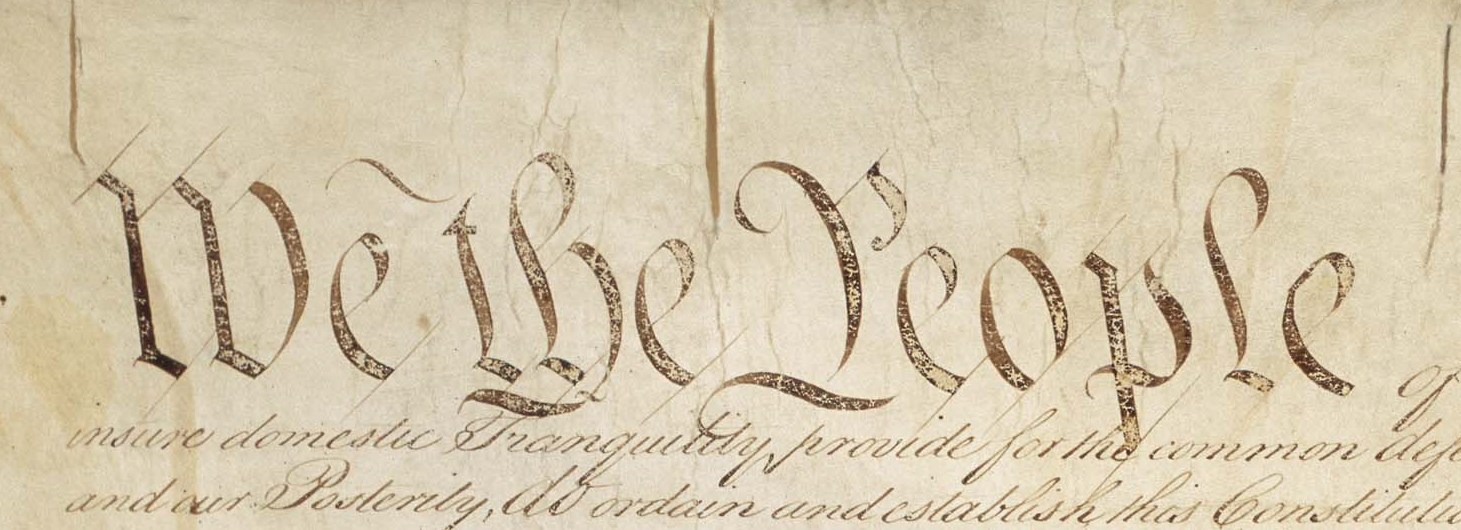
But as great and pivotal as the Constitution is, in itself it has no power -- not the online reproductions and scans, not the many paper copies, not even the great original parchments. The Constitution is not a magical object.
The power of the Constitution lies in the fact that every American, every day, decides to follow it. It is the basis of our law, our mythos, and our society. Without it, everything falls apart. And yet it is only an idea, an ideal, without reality or meaning until given form and shape by the decisions, every day, of those who choose to follow it.
If we are to honor the Constitution, we have three choices. We can accept it as it was written, by white men who excluded women, persons of color, and those who did not own land. We can lawfully amend the Constitution, in order to refine its basic concepts, and in order to better serve citizens who, hopefully, are adapting to a more perfect concept of freedom. We can also interpret the Constitution and its amendments, with rational discussion and argument, and a knowledge of history, precedent, and the other writings of the Founders who often explained exactly what they were trying to achieve.
These are our only options. If we ignore the Constitution, if we push through its barriers and shatter its boundaries, we will destroy it. It is fragile; it was scratched onto parchment with ink and sharp pens, a very long time ago. And remember that it is powerless in any case. It exists in the mind and heart and actions of every American, every day, who believes that a free republic, based on the will of the people and subject to no tyrant, is a worthwhile endeavor. We are the Constitution; its power lies in us. If it is compromised, if too many lines are crossed and too many boundaries broken, the keystone of the reality of our civilization will break, and all will fall with it.
The words scratched on parchment with such hope, now protected behind glass, will fade with time, and break and scatter into dust, and none will remember.
Saturday, February 22, 2025
The Sea at Mughain Mentioned on Wikishire!
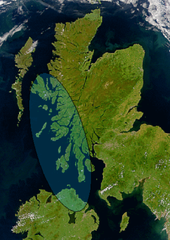 |
| Location of Dalriada. Source: Wikishire. |
A few days ago I was having a really bad day, but I ran across something that made me feel a lot better. Hint: look at the "In Fiction" section of Dalriada--Wikishire.
My novella, The Sea at Mughain, was mentioned in the Dalriada entry on Wikishire. I did not know it was there. It made my day.
Part of the reason I wrote this story was to try to understand the world of my long-ago Irish and Scottish ancestors; if possible, to spin a thread between their world and ours. It makes me profoundly happy to find mention of The Sea at Mughain on a British website, in an entry about a legendary place so important to my story.
Monday, September 4, 2023
Jaleth and the Dragons, Now in Paperback
In 2017, I published Jaleth and the Dragons as a stand-alone e-novellette for Kindle and Nook. I did not publish it as a paperback because it is 50 pages long, a "long short story." I intended, at some point, to publish a short-story collection that would include Jaleth and the Dragons, in both print and e-formats.
However, I realized my parents would not be able to see Jaleth in its e-incarnation, so I decided to put together a print version for them. (It is much easier, by the way, to do the print version first.) I did most of the work and then there it sat for six years. There has been a lot going on. But I finally finished it, got ready to get them copies, and thought . . . why not? I had done all the work and it was ready to go . . . so I went ahead and put it up for sale on Amazon. I'm still planning to do the short story collection, but at this rate it will be a few more years, so Jaleth and the Dragons can stay in print until then.
Happy Anniversary, Mom and Dad!

Thursday, July 7, 2022
Portrait
 |
| La Bella Principessa by Leonardo da Vinci |
My favorite painting by Leonardo da Vinci surfaced a few years ago and was sold at private auction. It is a picture of a girl, in profile, with beautiful wavy hair. It is believed to be the portrait of a fourteen-year old Italian noblewoman, Bianca Sforza, commissioned for her marriage. She was married and then died just a few months after the portrait was painted, probably from complications from pregnancy.
Such deaths were common then. They are not common now in the developed world, largely because of a network of women's healthcare that includes, but is not limited to, access to abortion for those who require it.
Bianca Sforza had few human rights. Noblewomen's marriages were arranged. She was, in essence, sold, just as her portrait was sold centuries later. Her father, and then her husband, made the choices about her body that led to her fate.
Many more deaths like hers will now occur, and there is now no da Vinci to immortalize them.
Wednesday, April 27, 2022
Ghost Yoga
I want to do a show on the Travel Channel called GHOST YOGA. It will be either:
1) People do yoga at haunted places to see if they can feel the ghostly energy.
2) People do yoga with ghosts.
3). Ghosts do yoga. (Because ghosts are invisible, this one would be a camera pointed at an empty location for an hour.)
Subscribe to:
Posts (Atom)